Don’t use This Guy to do work for you… He ripped us off!
Does this title look familiar? I see it and many others like it every day on various social media sites.
Unfortunately, I see this title just as many times and likely from the people that posted the first time. Foregoing the potentially obvious problems of people working in the construction industry in Florida without proper licensing and insurance; I want to tell you the number one reason why you should only hire licensed professionals to do your work. In short, THE CONTRACT.
Contracts come in all shapes and sizes and they include as much or as little as the creativity of the person writing it. There’s an old adage that says, “contracts and fences make for good neighbors” or something like that. A good contract should contain the answers to the following questions; Who, What, Why, When, Where & How. A great contract will provide extremely detailed answers to these questions.
To illustrate this a little better I want to go back to the social media post of the unhappy couple that felt as though they got ripped off on their bathroom remodeling project. Why do they feel this way? Simple, they feel they paid for something that they didn’t receive. I am certain, when they first met with Mr. Low Price, he assured them that he could do the job and it could be done in a matter of days (if not hours), and this was all that Mr. & Mrs. Unhappy Couple heard! Little, if any, details of the project were ever discussed. So, Mr. Low Price is walking away with one idea and Mr. & Mrs. Unhappy Couple walk away with another idea. The odds of a project like this working out to the benefit of both parties is very small. Likewise, the odds of Mr. and Mrs. Unhappy Couple making the second post above, about 1-2 weeks after Mr. Low Price starts the job, are very high.
A Well Written Contract is Crucial
A well written contract could have avoided all of this, because everyone knows what to expect, or what is expected of them. Let’s take a closer look:
1) In order to write a contract in the state of Florida, you must be a licensed contractor. This license can come from the state or local government (note the local license has some restrictions).
a) If the contractor has a license, they will most likely have the proper insurance for your project. This can easily be verified by asking them to provide a copy of their general liability and workmans compensation insurance certificates.
2) As stated before, a well written contract will answer the following questions:
a) Who: Who is going to do the work? Will their be subcontractors involved? Who will the work be done for? Will you be present while the work is going on? And on and on….
b) What: What, specifically do you want done? What color? Size? Shape? texture?….See where I’m going with this? All of these questions should be answered in detail.
c) Why: This is not always necessary to cover in a contract, but if the question feels necessary to answer then it should be answered.
d) When: One of the bigger questions to clarify; when will the project start? Or stop? Does the contract cover the payment schedule (it should)? How about when special order items need to be ordered? Do you think it might be important to know if my company will be closed during the upcoming holidays? Details, details, details…..
e) Where: This may seem like the most basic and assumed question out there but think about this. The sales person met with you, and understands you want your guest bathroom remodeled. However, if the lead installer didn’t get enough sleep the night before you could come home to a completely demolished master bathroom instead of your guest bathroom (which is what you contracted for).
f) How: This section often gets left out of contracts by contractors that are trying to make more money off of you. For example, let’s say I have sold you a bathroom remodeling project and during the sales pitch I told you about this wonderful waterproofing material and you loved the fact that your bathroom would never leak again. However, during the installation process (which you weren’t home for) I decided I needed to make a few extra dollars on your project to pay for the labor on my last project that didn’t go so well, so I left out that expensive water proofing material. And guess what, it’s covered by the tile so you will never know (until is way too late). Make sure the “how” is covered in your contract (and ask for daily photos).
g) Pay schedule: This should be standard on all contracts. A pay schedule tells you how much you are going to pay and when you are going to pay it. There will be a deposit and then the balance will be paid out over the course of the project. Pay schedules can vary from one contractor to the next but typically you can expect them to go something like this:
i) Initial deposit: Typically due at the time you sign the contract and usually 10% of the value of the contract.
ii) First draw: This can be due about a week before the job starts, or it can be due when we place your special orders (like a window project).
iii) Second and subsequent draws: These will be set up to be due on timed events (I like to receive money every Friday) or they can be tied to project goals (due upon completion of the tile work).
iv) Final draw: Due on the last day of work and typically between 5-15% of the contract value.
As I said in the beginning, the content of a contract is only limited by my imagination. Personally, I feel the more information I include in my contracts, the less headaches I have to deal with later on.
Oh, and by the way, if a contractor does present you with a contract and he fails to review it with you “line for line”; make sure to read it and make sure you understand what is being said; if not,have it clarified.
I have little doubt that Mr. Low Price could do the work that he said he could do. I have met some real craftsmen out there in the field. Where Mr. & Mrs. Unhappy Couple were let down was in Mr. Low Price’s ability to communicate, in writing, exactly what was going to be done, who was going to do it, when, where and how the work would take place, i.e. the Contract!
Make sure to insist on a contract for your next project.
The post Looking for someone to renovate my bathroom; Cheaply! Why a Well-Written Contract is Crucial appeared first on Sunset Builders.
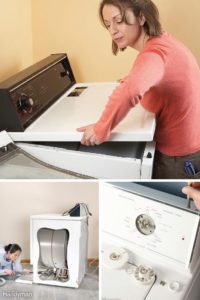 I arrived promptly 15 minutes late for dinner and was surprised to find that mom had invited more guests to the table. As I sat down, one of the guests was explaining to the rest of the table that they would have to go out tomorrow and buy a new dryer because something went terribly wrong with theirs early that day. In an attempt to be polite, I inquired as to the fate of their dryer and was told that in an attempt to “get at” some built up lint in the back of the dryer (you could see it sticking out of those holes) they had decided to remove 3 screws located on the inside of the dryer and on the back of the rotating drum. After the third screw was pulled out the drum “fell” and made a solid “thunk” noise when it came to rest. Realizing something had gone wrong but not knowing exactly what they decided to remove three more screws from the inside of the dryer and on the back of the rotating drum. Once again, after the removal of the third screw the drum fell again only this time it made a much louder “clunk” noise before coming to rest.
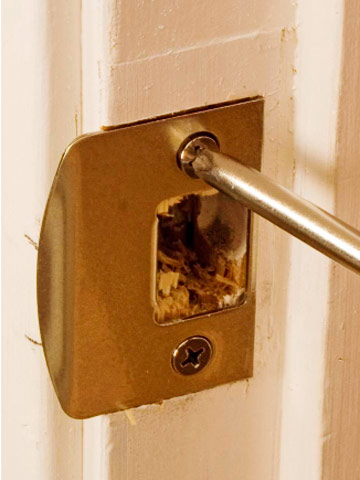 loose. Not to the point where they were sticking out and noticeable but just enough to let the strike plate slide forward preventing the door from closing tightly against the weather-stripping. The result of these two loose screws could easily add up to hundreds of dollars on her electric bill over the course of a year.
 My friend had the right idea; see a problem? Fix it before it becomes a major problem! Picture yourself getting up from your couch every hour, walking to the front door and reaching into your pockets and pulling out $0.60 and just throwing it out the door. After a short 24-hour period you will have thrown out $14.40. Would you reach down and pick this up or would you want to wait a few more days?